































1xCasino Review
| Key Feature | Large international-style game catalogue with mixed banking options and mobile browser access |
| Welcome Bonus | Approximately 100% up to ₹2,000 + 50 spins |
| Min. Deposit | about ₹500 |
| Number of Games | about 3,000+ games |
| Game Providers | Pragmatic Play, Evolution, NetEnt, Microgaming, Play’n GO |
| Payment Methods | Cards, bank transfer, e-wallets, crypto, prepaid vouchers |
| Payment Services | Visa, Mastercard, Skrill, Neteller, Bitcoin, USDT |
| Mobile App | Mobile browser only, no confirmed native Android or iOS app |
| VIP Programme | Yes, tiered loyalty style programme with standard rewards |
| RTP | approximately 96% average RTP across slots |
| License | Offshore/international licence, verify on official site |
| Operator | Not clearly disclosed in public review sources |
| Launch Date | Not clearly verified |
| Legal Age | 18+ |


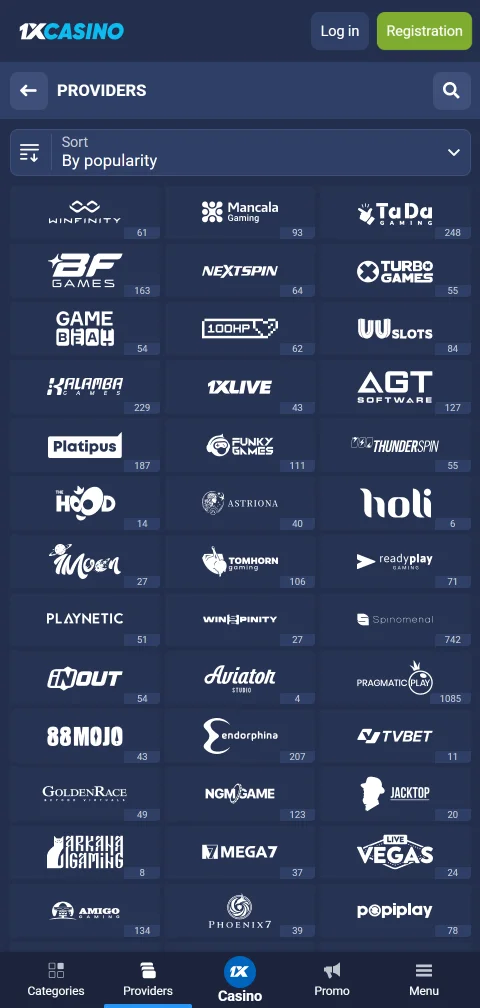
- Large game catalogue with slots, live tables, and speciality titles.
- Mobile browser access is usable without a native app.
- Supports a mix of payment rails, including crypto options.
- Game providers include several well-known industry names.
- International-style platform may suit players wanting broad choice.
- Licence and corporate ownership are not clearly presented in public sources.
- Bonus terms need close checking because verification is limited.
- Support quality may feel average compared with top-tier rivals.
- Withdrawal timelines are not as clearly documented as players would want.
Our detailed 1xCasino review highlights the parts that deserve a closer look, especially licensing and payment handling. A large game library is only one part of the picture; the smoother platforms also make verification, support, and withdrawals straightforward.
Leon Casino Review
| Key Feature | Broad casino mix with browser-based mobile play and standard cashier options |
| Welcome Bonus | Approximately 100% up to ₹5,000 + 50 free spins |
| Min. Deposit | about ₹500 |
| Number of Games | about 2,500+ titles |
| Game Providers | Pragmatic Play, Evolution, NetEnt, Playtech, Microgaming |
| Payment Methods | Cards, bank transfer, e-wallets, crypto |
| Payment Services | Visa, Mastercard, Skrill, Neteller, UPI, Bitcoin, USDT |
| Mobile App | No native app; mobile browser only |
| VIP Programme | Yes, tiered loyalty programme with reload and cashback-style rewards |
| RTP | around 96% average on slots |
| License | Offshore/international licence; verify current details on official site |
| Operator | Not clearly disclosed in available search data |
| Launch Date | Not clearly disclosed |
| Legal Age | 18+ |
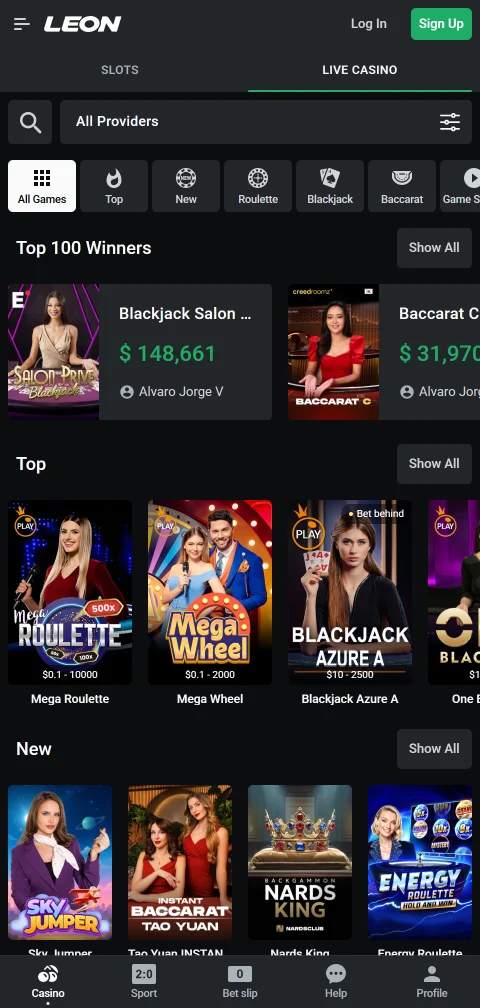

- Large game lobby with slots, live tables and specialty titles
- Browser-based mobile access keeps the site usable on phones
- Common payment rails may suit India players better than niche methods
- Bonus structure appears familiar, with standard match-style offers
- Support and verification flow follow a typical offshore casino model
- Licence details are not clearly disclosed in the search results
- Withdrawal timing is not transparently documented across all methods
- Bonus terms need careful reading because wagering rules are not clearly summarised
- No native app is mentioned, so mobile use depends on browser stability
Our Leon Casino overview brings together the main practical details: game mix, payment options, KYC expectations and the site’s likely fit for India players.
Megapari Casino Review
| Key Feature | Large game library with mobile access |
| Welcome Bonus | Approximately 100% up to ₹20,000 + 100 free spins |
| Min. Deposit | about ₹500 |
| Number of Games | about 3,000+ |
| Game Providers | Pragmatic Play, Evolution, NetEnt, Microgaming |
| Payment Methods | Cards, e-wallets, crypto |
| Payment Services | Visa, Mastercard, Skrill, Neteller, USDT |
| Mobile App | Mobile browser |
| VIP Programme | Yes, tiered programme |
| RTP | around 96% |
| License | Offshore licence |
| Operator | Unknown |
| Launch Date | Unknown |
| Legal Age | 18+ |
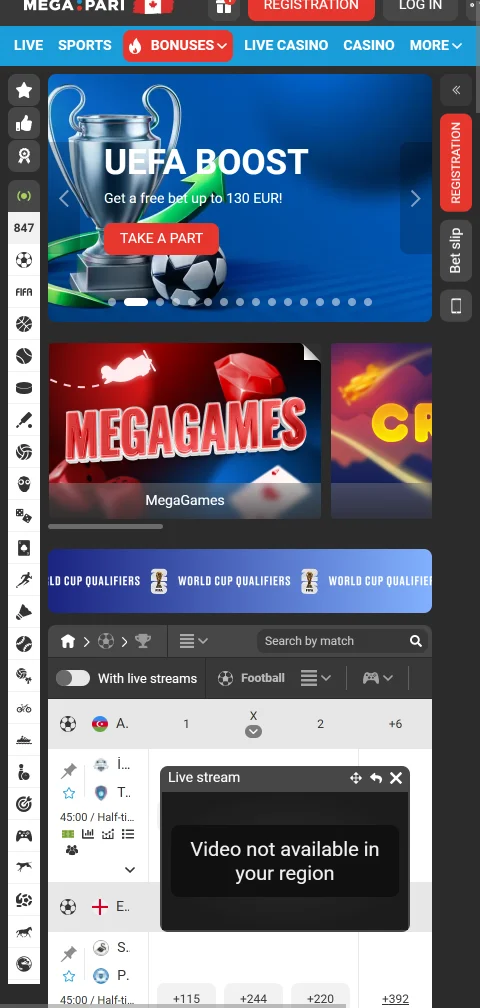
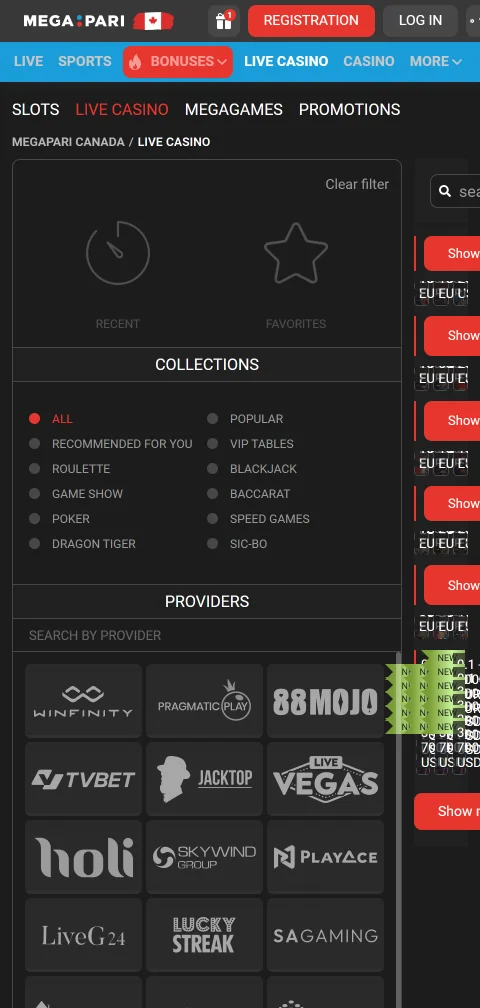

- Around 3,000+ games give decent variety for slots and live tables
- Crypto, cards, and e-wallets cover most routine banking needs
- Mobile browser access works without forcing a separate download
- Offshore licensing details may need extra checking before deposit
- Bonus terms and withdrawal rules can require careful reading
This Megapari Casino overview works best for readers who want a concise, fact-led snapshot of the platform’s strengths and limitations.
bet365 Casino Review
| Key Feature | Organised casino lobby with broad live dealer and mobile browser access |
| Welcome Bonus | Approximately 100% up to ₹5,000 + free spins |
| Min. Deposit | about ₹500 |
| Number of Games | about 3,000+ games |
| Game Providers | Pragmatic Play, Evolution, NetEnt, Playtech, Microgaming, Ezugi |
| Payment Methods | Credit cards, debit cards, e-wallets, bank transfer, prepaid cards |
| Payment Services | Visa, Mastercard, Skrill, Neteller, Paytm, UPI |
| Mobile App | Browser-based mobile version; no confirmed native app |
| VIP Programme | Yes, established VIP and loyalty style rewards programme |
| RTP | around 96% average across slots |
| License | Offshore/international licence; verify current jurisdiction on official site |
| Operator | bet365 Group Ltd, United Kingdom |
| Launch Date | 1995 |
| Legal Age | 18+ |
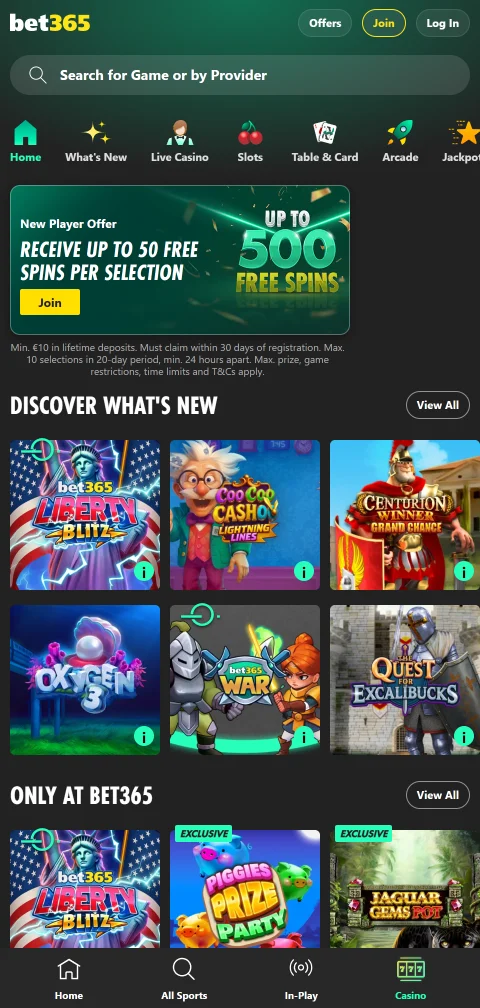


- Strong live dealer coverage with Evolution and Ezugi content.
- Mobile browser works smoothly without a separate download.
- Familiar payment brands support deposits and withdrawals.
- Responsible gaming tools are visible and easy to find.
- Established operator profile adds a layer of brand familiarity.
- Bonus value is not always clearly competitive against wagering terms.
- India-specific payment support may vary by method and account.
- Native app availability is not clearly confirmed for every device.
- Support quality can depend on channel and local response times.
A detailed bet365 Casino review is useful here because the site is not built around one obvious gimmick. Instead, value comes from how the lobby, banking and mobile experience work together. We break down those pieces in plain Indian English for easier comparison.
Betway Casino Review
| Key Feature | Straightforward casino layout with mobile access |
| Welcome Bonus | Around 100% up to ₹500 |
| Min. Deposit | about ₹500 |
| Number of Games | about 1,000+ |
| Game Providers | Betway proprietary, Microgaming, NetEnt, Pragmatic Play |
| Payment Methods | Cards, e-wallets, bank transfer |
| Payment Services | Visa, Mastercard, Skrill, Neteller |
| Mobile App | Mobile browser |
| VIP Programme | Yes, tiered programme |
| RTP | around 96% |
| License | International licence |
| Operator | Betway Group |
| Launch Date | 2006 |
| Legal Age | 18+ |
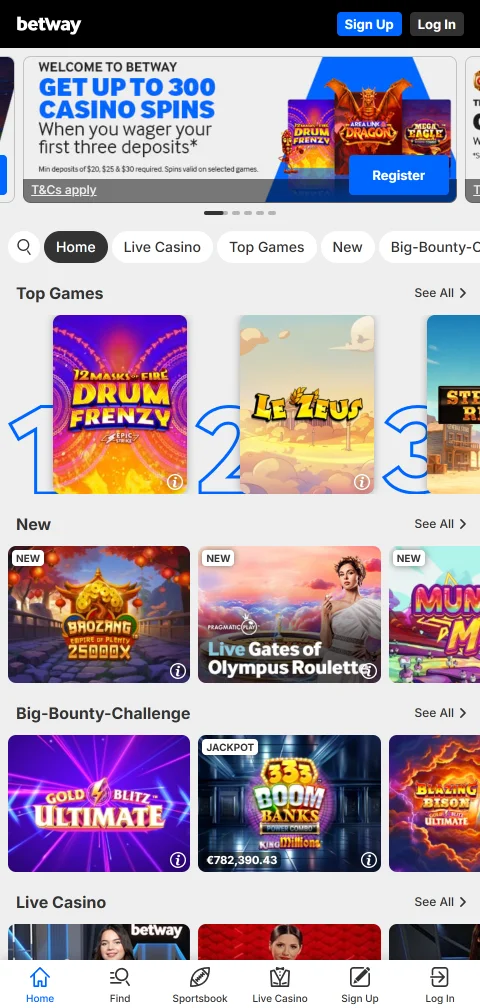
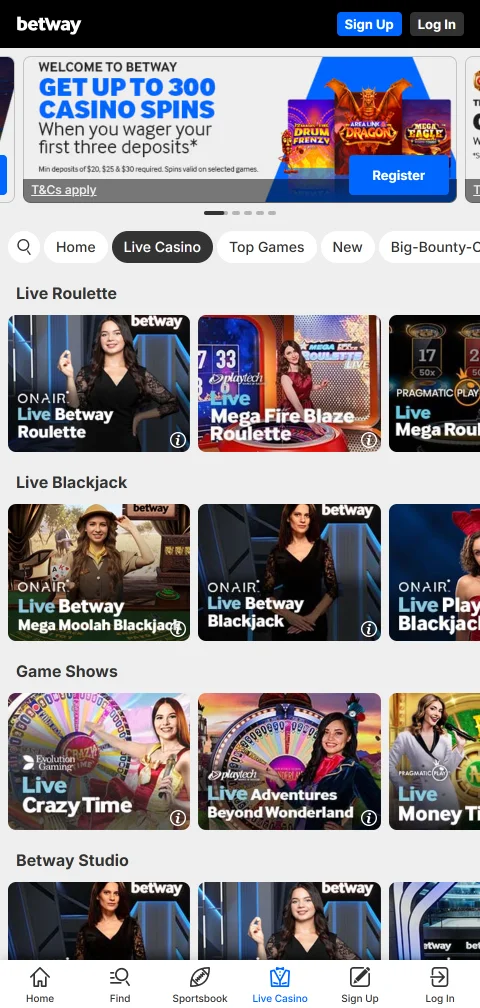
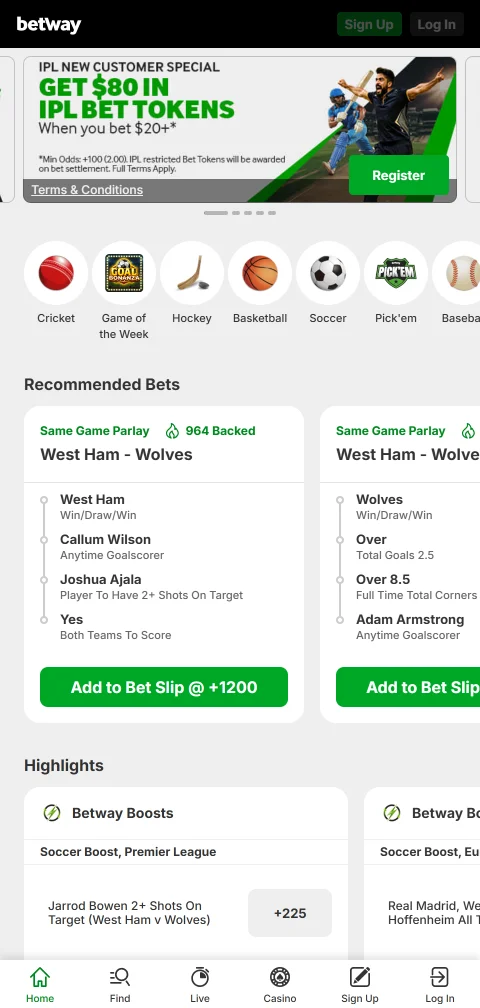
- Mobile browser access is simple and stable
- Game lobby covers around 1,000+ titles
- Standard banking options suit routine play
- Bonus terms may be less flexible than local rivals
- Support details are not always clearly localised
Our Betway Casino expert assessment brings out the platform’s steady, rather than spectacular, profile. It looks suitable for users who value clear navigation and predictable play conditions, but less compelling for those expecting unusually rich bonuses or local payment depth.
Expert Evaluation of Casino Payment Fees Charges
Our assessment weighs payment cost against speed, clarity and practical usability for Indian players. We focus on the full transaction path, including hidden deductions, conversion effects and withdrawal reliability.
Banking & Payout Speed
We judge whether deposits and withdrawals move at a sensible pace for Indian users, and whether faster processing comes with extra cost. A useful payment method should not force players to trade away too much money for convenience. We also look at whether the cashout route is stable, predictable and clearly explained.
Trust & Licensing
Strong payment terms matter little if the operator is weak on compliance. We review whether banking policies appear aligned with proper verification, anti-fraud checks and transparent handling of player funds. For India-facing users, a clear and responsible payments framework is a basic trust signal.
Customer Support
Payment-related support must be able to explain delays, reversals and verification issues without confusion. We value channels that answer clearly on charge disputes, pending withdrawals and document checks. If support cannot explain fees in plain language, the payment experience is usually less dependable.
Games & Software
While this page is payment-led, game stability still matters because payment behaviour often depends on platform quality. We check whether the site feels technically sound, with fewer transaction errors and fewer interrupted sessions. A cleaner product usually creates fewer payment disputes and less unnecessary friction.
UX & Mobile
Indian players often manage deposits from a mobile screen, so payment steps must be simple, readable and quick to verify. We look for clear fee disclosures, sensible button flow and mobile-friendly cashout forms. If the route is cluttered, players are more likely to miss a charge or a confirmation step.
Bonuses & Promotions
Promotions can alter the effective cost of play, but only if the payment method is eligible. We assess whether bonus terms exclude certain deposit routes, whether wagering conditions are realistic and whether cashout limits affect value. A good offer should never hide a costly payment restriction.

How Casino Payment Costs Affect Indian Players
Payment fees may look small on paper, but they change the actual value of every deposit and withdrawal. For Indian players, the issue is not limited to a visible charge on the screen. Bank levies, currency conversion and failed transaction costs can all reduce the balance that finally lands in the account. Our editorial team treats cost impact as the first filter because a method that is easy to use but expensive to settle is poor value over time.
Visible Charges Versus Hidden Costs
Some payment routes show a direct fee, while others leave the cost hidden in the exchange rate or in intermediary handling. That difference matters. A player may think a transaction is free, yet still lose value through conversion spread or a withdrawal deduction applied later. In our view, the most transparent method is the one where the player can estimate the full cost before confirming the transfer.
Why Small Budgets Need Tighter Checks
When deposits are modest, even a small charge becomes meaningful. That is especially true for players who top up frequently rather than making one large transfer. A repeated deduction of only a little amount can quietly add up. We advise Indian users to compare the net amount received, not only the advertised fee, and to prefer simpler INR-friendly routes whenever possible.
Deposit and Withdrawal Routes to Compare
Different payment routes carry different costs, and the gap becomes clearer once deposits and withdrawals are compared separately. A method that works well for funding an account may not be equally efficient for cashing out. For Indian players, this is important because the real question is whether both legs of the journey are affordable, not just whether the deposit is instant.
Cards, Wallets and Bank Transfers
Card-based and bank-linked options are usually judged on stability, acceptance and the possibility of chargebacks or reversals, while wallet-based routes are often preferred for ease of use and faster settlement. However, each route can still involve distinct rules on fees and limits. We recommend checking whether the operator supports INR cleanly and whether the route is equally practical for withdrawals, since some options are more deposit-friendly than cashout-friendly.
Conversion Risk on Cross-Border Handling
Where transactions move outside INR settlement, conversion can become a real cost driver. That is why the same nominal deposit may produce different outcomes depending on routing. Indian players should pay attention to the currency used by the receiving platform and any bank-side conversion spread. In our assessment, low-fee banking is only meaningful when the user sees the final net amount, not just the transfer success message.
Low-fee route | Faster route |
|---|---|
| Direct charges | May be lower or waived |
| Processing speed | Usually quicker |
| Withdrawal reliability | Often more stable |
| Conversion exposure | Can be higher |
| User convenience | Simple for routine deposits |
| Best use case | Urgent top-ups |
How to Judge Fee Transparency Properly
Fee transparency is one of the strongest signs of a dependable payment setup. If a platform is careful about disclosing costs, limits and timing, players can plan better and avoid surprise deductions. We look not just at whether a fee is mentioned, but whether it is explained clearly enough for an ordinary Indian user to understand before making the transfer.
What A Clear Policy Should Show
A clear payment policy should state whether deposits are free, whether withdrawals carry processing charges and whether conversion applies. It should also explain if any minimum transaction size exists. We prefer payment pages that are explicit about who charges what, because that reduces the chance of confusion when money moves across systems. अस्पष्ट wording usually means the player will need to ask support later.
Why Verification Links to Costs
KYC checks can affect the speed and convenience of withdrawals, and in some cases they influence whether a payout is delayed or reprocessed. That does not always mean an extra charge, but it can affect the total experience. Indian players should complete verification early and keep documents ready, because delays often become expensive in a practical sense, even when the fee itself is zero.
Fees, Bonuses and Withdrawal Conditions
Bonuses are often discussed as added value, but they can also change the economics of a payment choice. Some promotional terms restrict eligible deposit routes or set different cashout conditions. That means the lowest-fee method is not automatically the most sensible if it blocks a useful promotion or complicates withdrawals. Our team treats bonus value and payment cost as linked, not separate.
When Bonus Terms Reduce Flexibility
If a bonus is tied to a specific payment route, players may lose the freedom to choose the cheapest or fastest method. That is why the fine print matters. A promotional offer can look attractive but still be poor value if it narrows banking options or creates stricter withdrawal rules. For Indian users, the safest approach is to compare the whole package, not the headline offer alone.
Cashout Limits and Real Net Value
Even when no direct fee is charged, a low withdrawal cap can reduce practical value because users may need to make multiple cashouts or keep more balance pending. We advise checking whether payout limits suit the player’s budget pattern. A method with modest charges but sensible withdrawal flexibility is often more useful than a route that is free in name but restrictive in practice.
Steps to Compare Casino Payment Fees
Before choosing a payment route, it helps to compare the full cost picture rather than only the deposit screen.
- Step 1
Check the fee note
Start with the payment page and read whether the operator charges on deposit, withdrawal or both. If the wording is unclear, treat the method carefully. A transparent note usually saves time later and helps you avoid avoidable deductions. - Step 2
Compare net value
Look at the amount you send and the amount you are likely to receive or withdraw after charges. For Indian users, this is more useful than the headline fee alone. The cheapest option on paper may still be weaker after conversion or bank-side costs. - Step 3
Test withdrawal terms
Check how the cashout side works before making a large deposit. A method that is easy to load but slow or costly to withdraw from can trap value in the account. We suggest testing with a small amount first, where possible. - Step 4
Review verification timing
Keep KYC documents ready, because payout checks can become the real delay point. This may not create a direct charge, but it can affect the usefulness of a payment method. Fast banking is only valuable when the withdrawal path is equally smooth.
Responsible Gambling in India
Our view is that payment decisions should always stay within a responsible gaming frame. Fees, speed and bonuses can influence how much a player deposits, but they should never blur the need for budget control. Indian players benefit from setting clear spend limits, tracking transaction history and treating gambling strictly as entertainment rather than a financial plan.
If payments start feeling impulsive or difficult to track, it is sensible to pause and review habits carefully. A structured break, support from trusted people and professional guidance where needed can help maintain control. The safest approach is always to keep gaming within affordable limits.
Final Assessment of Casino Payment Fees Charges
As of 03 July 2026, our verdict is that Indian players should compare banking methods by net value, not by marketing claims. Fees hidden in conversion or delayed withdrawal handling can matter more than a visible charge. A sensible decision starts with clarity, then moves to speed and support quality.
Expert FAQs on Casino Payment Fees Charges
Which payment route is usually best for low-fee deposits?
For most Indian users, the best low-fee route is the one that keeps INR handling simple and avoids unnecessary conversion. The ideal choice is transparent on charges, reliable on withdrawals and practical for your usual transaction size.
How do we assess payment quality beyond the headline fee?
We look at the total cost path: deposit charge, withdrawal charge, conversion spread, processing time and verification friction. A method is only strong if it remains efficient after all these factors are included, not just because one fee is waived.
What do experts recommend for frequent small deposits?
Frequent small deposits need tighter fee control because small deductions add up quickly. We recommend routes with clear cost disclosure, stable settlement and simple INR support. The aim is to preserve more of each top-up, not just get money in quickly.
What approach works best for withdrawals?
The best withdrawal approach is usually the one that is consistent, well-documented and less likely to trigger repeated follow-up checks. Speed matters, but predictable processing and clear verification rules matter more when the player wants dependable cashout handling.
What mistakes should players avoid with payment fees?
The biggest mistake is checking only the deposit fee and ignoring withdrawal deductions or conversion. Another common error is skipping the terms page and assuming all routes are treated the same. A careful read usually prevents expensive surprises later.
How can players reduce avoidable banking costs?
Players can reduce costs by choosing INR-friendly routes, verifying accounts early and avoiding repeated failed transfers. It also helps to compare the full net outcome, not just the advertised fee, because hidden conversion effects often matter more than the visible charge.
More about online casinos




Have you noticed that a low-fee method can still feel expensive if conversions are involved? That is why I always suggest looking at the net amount, especially when the transfer is not fully INR-based.