



























BitStarz Casino Review
| Key Feature | Large offshore game library with crypto-friendly cashier and browser-only access |
| Welcome Bonus | Approximately 100% up to ₹20,000 |
| Min. Deposit | about ₹1,000 |
| Number of Games | about 3,000+ games |
| Game Providers | Pragmatic Play, Evolution, Microgaming, NetEnt, Playtech, Red Tiger |
| Payment Methods | Credit cards, e-wallets, crypto, bank transfer, prepaid cards |
| Payment Services | Visa, Mastercard, Skrill, Neteller, Bitcoin, Ethereum, Litecoin, MuchBetter |
| Mobile App | No native app; mobile browser on iOS and Android |
| VIP Programme | Yes, tiered VIP programme with rewards and cashback |
| RTP | around 96% average RTP |
| License | Offshore/international licence; verify current details on site |
| Operator | White Hat Gaming Ltd, Malta-registered operator group |
| Launch Date | 2015 |
| Legal Age | 18+ |
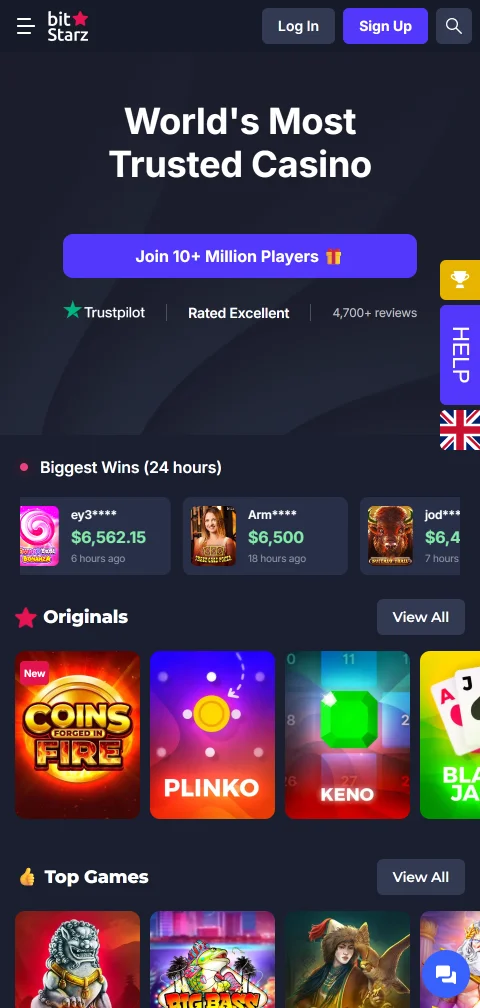
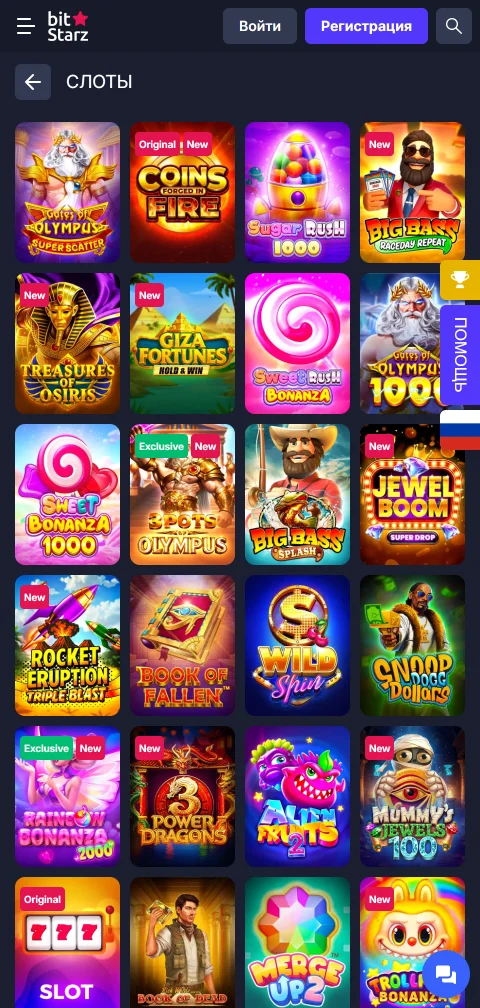
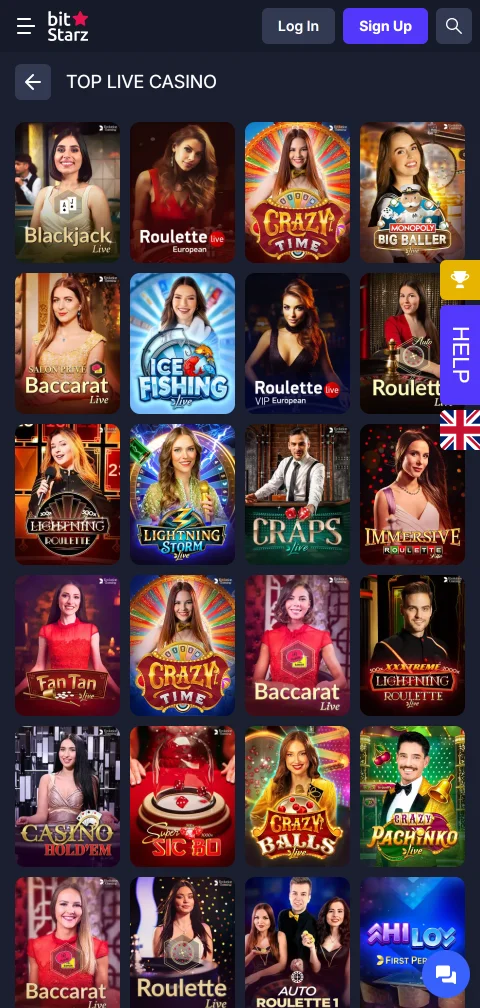
- Large catalogue with slots, live tables and specialty games.
- Crypto and card payments give it wider cashier flexibility.
- Browser-based mobile play keeps access simple on India phones.
- Offshore licence and responsible gaming tools are visible.
- Support and verification flow are straightforward, though not localised.
- No clearly confirmed India-specific banking such as UPI or Paytm.
- Licence details need extra checking before making any deposit.
- Withdrawal speed varies by method and verification status.
- Bonus terms can be restrictive if wagering is high.
BitStarz Casino offers an offshore setup with crypto payments and a large game lobby. BitStarz Casino review highlights browser-based play, withdrawal checks and the need to read KYC terms before depositing.
Instant Casino Review
| Key Feature | Browser-first access with standard casino tools |
| Welcome Bonus | Around 100% up to ₹10,000 + 50 free spins |
| Min. Deposit | about ₹500 |
| Number of Games | about 3,000+ |
| Game Providers | Pragmatic Play, Evolution, NetEnt, Microgaming |
| Payment Methods | Cards, e-wallets, crypto |
| Payment Services | Visa, Mastercard, Skrill, Neteller, Bitcoin |
| Mobile App | Mobile browser |
| VIP Programme | Yes, tiered program |
| RTP | around 96% |
| License | International licence |
| Operator | Not clearly disclosed |
| Launch Date | Unknown |
| Legal Age | 18+ |



- Large game lobby with about 3,000+ titles
- Browser-based mobile play without download
- Common payment options including cards and e-wallets
- Licence and company details are not clearly disclosed
- Support hours and withdrawal rules need closer checking
- Bonus terms may carry standard wagering restrictions
The Instant Casino analysis compares the platform’s strengths and weak spots in plain terms. We focus on game choice, payment handling and responsible gaming tools, because these shape the actual player experience.
888 Casino Review
| Key Feature | Broad international casino line-up with live tables and browser play |
| Welcome Bonus | Approximately 100% up to ₹8,000 plus 88 free spins |
| Min. Deposit | About ₹800 minimum |
| Number of Games | About 2,000+ games |
| Game Providers | 888 Holdings, Playtech, Evolution, NetEnt, Microgaming |
| Payment Methods | Cards, e-wallets, bank transfer, crypto |
| Payment Services | Visa, Mastercard, Skrill, Neteller, bank transfer |
| Mobile App | Mobile browser optimised, no compulsory download |
| VIP Programme | Yes, tiered loyalty programme with recurring rewards |
| RTP | Around 96% average on slots |
| License | International offshore licence, verify current number on site |
| Operator | 888 Holdings plc, United Kingdom |
| Launch Date | Launched 1997 |
| Legal Age | 18+ |
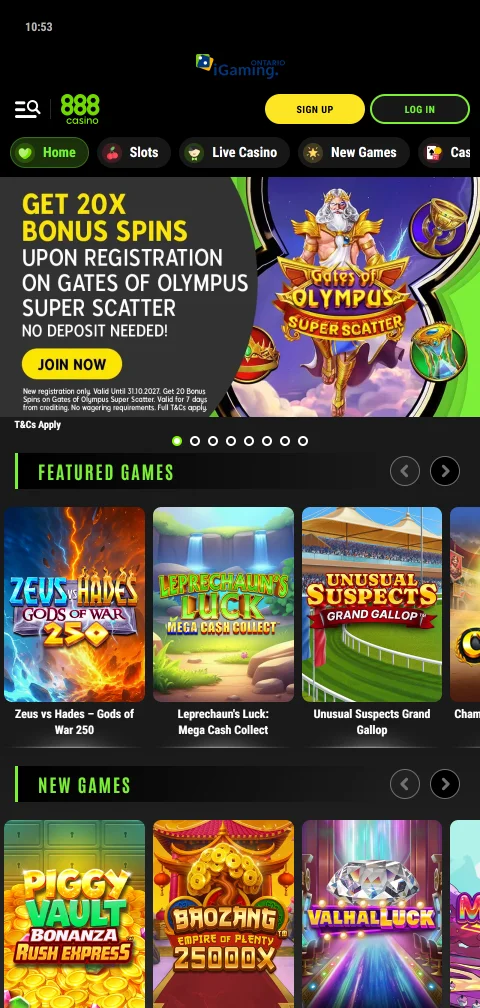


- Large live casino and slots catalogue for regular play
- Browser-first mobile access keeps setup simple on smartphones
- Card and e-wallet banking cover common player needs
- Long-running brand gives some operational continuity and familiarity
- Licence details need checking directly before depositing from India
- Bonus terms can be restrictive compared with simpler offers
- Withdrawal timing may vary after KYC and payment method review
Our 888 Casino review looks at the operator’s long-running brand profile, banking clarity and live dealer depth. For India players, the useful questions are licence visibility, withdrawal handling and whether the site explains KYC before you deposit. That practical angle matters more than marketing language.
Pinnacle Casino Review
| Key Feature | Mobile-friendly, standard casino experience |
| Welcome Bonus | Around 100% up to ₹1,000 + 100 free spins |
| Min. Deposit | about ₹500 |
| Number of Games | about 2,000+ |
| Game Providers | Pragmatic Play, Evolution, NetEnt, Microgaming |
| Payment Methods | Cards, e-wallets, bank transfer, UPI |
| Payment Services | Visa, Mastercard, Skrill, Neteller, UPI |
| Mobile App | Mobile browser |
| VIP Programme | Yes, tiered program |
| RTP | around 96% |
| License | International offshore licence |
| Operator | Not clearly stated |
| Launch Date | Not clearly stated |
| Legal Age | 18+ |


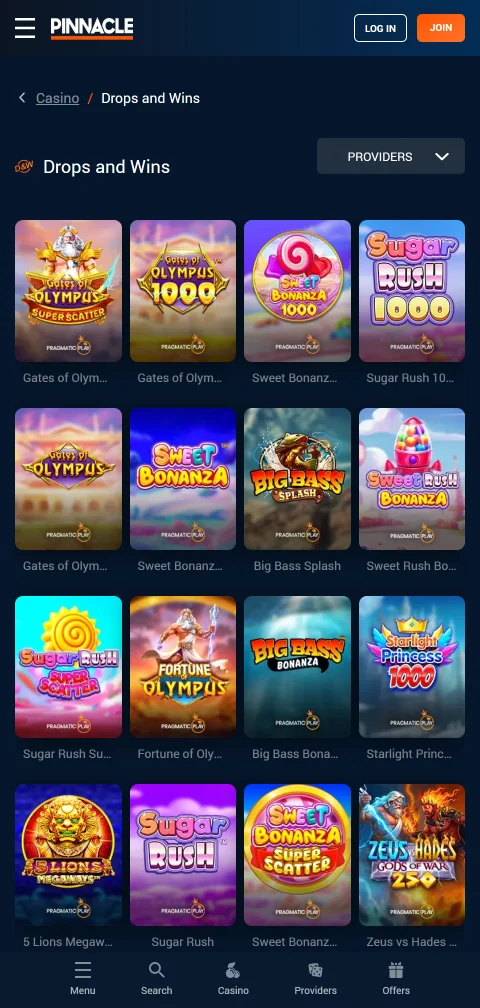
- Mobile-friendly access with standard browser play
- Broad provider mix across slots and live tables
- Typical 24-48h withdrawal window for common methods
- Bonus value depends heavily on wagering rules
- Support and company details are not clearly disclosed
This Pinnacle Casino overview is built around practical reading, not promotional language. We track the basics that regular players care about most: available games, payment options, mobile access and the way the operator manages account checks. That helps separate real usability from surface-level presentation.
bet365 Casino Review
| Key Feature | Organised casino lobby with broad live dealer and mobile browser access |
| Welcome Bonus | Approximately 100% up to ₹5,000 + free spins |
| Min. Deposit | about ₹500 |
| Number of Games | about 3,000+ games |
| Game Providers | Pragmatic Play, Evolution, NetEnt, Playtech, Microgaming, Ezugi |
| Payment Methods | Credit cards, debit cards, e-wallets, bank transfer, prepaid cards |
| Payment Services | Visa, Mastercard, Skrill, Neteller, Paytm, UPI |
| Mobile App | Browser-based mobile version; no confirmed native app |
| VIP Programme | Yes, established VIP and loyalty style rewards programme |
| RTP | around 96% average across slots |
| License | Offshore/international licence; verify current jurisdiction on official site |
| Operator | bet365 Group Ltd, United Kingdom |
| Launch Date | 1995 |
| Legal Age | 18+ |
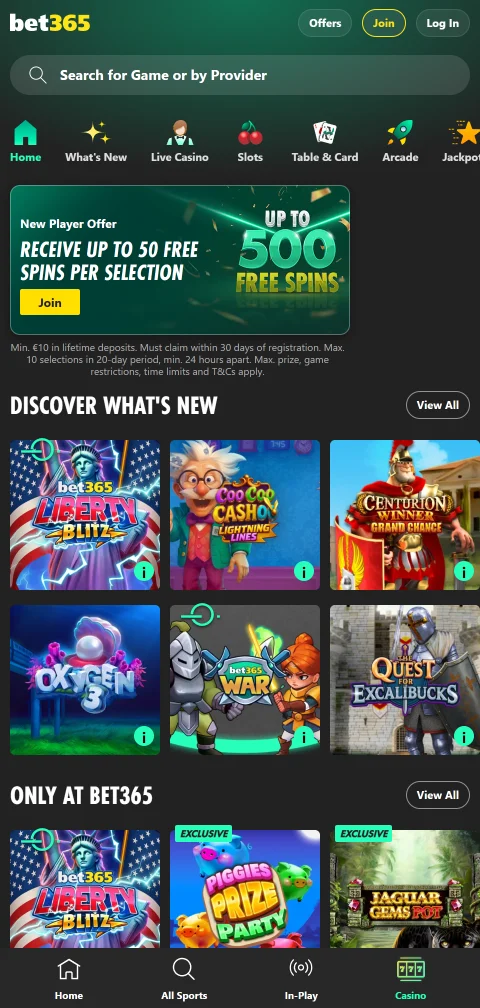

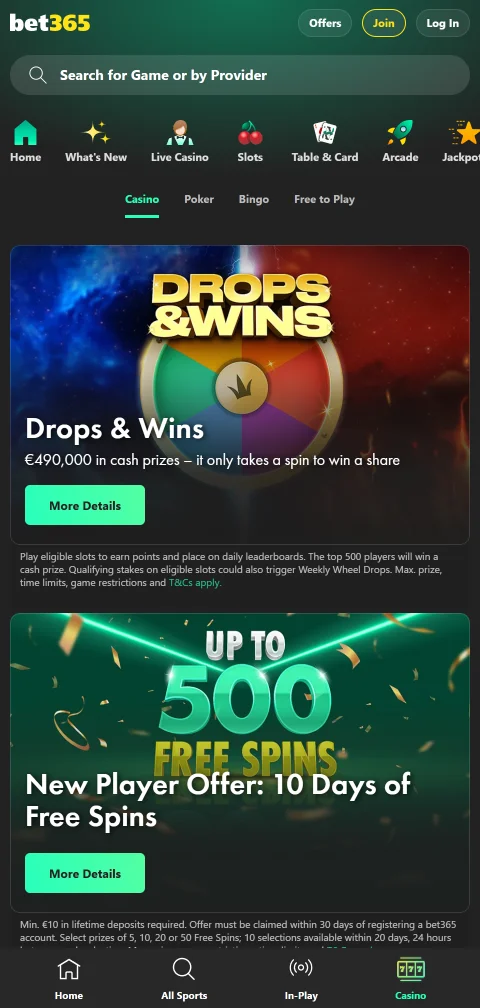
- Strong live dealer coverage with Evolution and Ezugi content.
- Mobile browser works smoothly without a separate download.
- Familiar payment brands support deposits and withdrawals.
- Responsible gaming tools are visible and easy to find.
- Established operator profile adds a layer of brand familiarity.
- Bonus value is not always clearly competitive against wagering terms.
- India-specific payment support may vary by method and account.
- Native app availability is not clearly confirmed for every device.
- Support quality can depend on channel and local response times.
bet365 Casino review focuses on licensing, game variety and banking for India players. Our snapshot notes a polished casino lobby, mobile-friendly access and familiar support channels, while also checking how withdrawal handling and verification compare with industry norms. It is a useful starting point for readers who want the core facts first.
How We Rate VIP Loyalty Programme Casinos in India
We assess VIP loyalty schemes by looking at player value, clarity and practical redemption terms. Our approach is built for Indian readers who need to know whether the rewards justify the extra play and the additional conditions.
Loyalty Value and Reward Structure
We first examine how points, tier credits or cashback are earned and whether the reward rate is meaningful in practice. A scheme is rated higher when benefits are easy to understand, fairly distributed and not hidden behind unclear thresholds or low-value conversions.
Banking and Withdrawal Practicality
We then check whether loyalty perks influence payout access, withdrawal limits or processing times. For Indian players, the key issue is whether rewards can be redeemed without unusual delays, extra verification or forced bonus conversion that reduces real cash value.
Games and Contribution Rules
We review which games contribute to loyalty progress and whether exclusions are reasonable. A scheme becomes less useful if slots, live tables or other common categories contribute differently without clear disclosure, because players may then earn rewards more slowly than expected.
Mobile Experience and Ease of Tracking
We assess how clearly the loyalty dashboard presents tier progress, reward balances and expiry dates on mobile devices. Since many Indian users play on phones, a good system should make tracking simple without forcing repeated navigation or confusing menu layers.
Trust, Licensing and Fair Terms
We consider whether the platform shows licensing details, responsible gaming tools and transparent terms for reward eligibility. Loyalty features carry more weight when the wider site is credible, because unclear ownership, hidden rules or weak player safeguards reduce trust.
Support and Issue Resolution
We test how quickly support teams clarify points, tier status and reward redemption queries. A strong loyalty programme should be backed by responsive help, because even a useful scheme loses value if players must wait too long for straightforward answers.

Understanding VIP Loyalty Programme Casinos in India
VIP loyalty programmes are built to reward repeat play, but the structure can vary sharply from one platform to another. In India, the main issue is not whether a scheme exists; it is whether the reward path is genuinely transparent and worth the extra activity. Our editorial team looks at how points are earned, how tiers are unlocked and whether the overall value improves for disciplined players.
What a Loyalty Scheme Really Means
A loyalty scheme is usually a structured reward system attached to regular account activity. Some programmes focus on points, while others use cashback, tiered perks or exclusive bonuses. The practical question is simple: does the reward arrive in a usable form, or is it locked behind conditions that make it difficult to benefit in real terms? For Indian users, this matters because deposit size, game choice and cashout expectations can differ widely.
Why Indian Players Should Read the Fine Print
Players from India often use INR-oriented banking methods and prefer straightforward value. That makes terms more important than presentation. Contribution percentages, expiry windows, max redemption limits and excluded games all affect whether a loyalty programme helps bankroll management or adds friction. If a scheme is unclear at the start, it usually becomes harder to use later, especially once play volume increases. On rupacasino.com, we treat clarity as part of value, not as an optional extra.
Core Loyalty Features and Reward Categories
The most useful way to compare VIP programmes is by separating the reward mechanics into categories. Some rewards are immediate, some are delayed, and some only matter once a player reaches a higher tier. That difference matters because the true value of loyalty is not the headline label, but how often the player can realistically benefit from it.
Points, Cashback and Tier Credits
Points-based systems are common, but the conversion rate is what determines whether the scheme feels worthwhile. Cashback can be easier to understand because the value is more direct, though it may still be subject to conditions. Tier credits matter more to players who are active over time, because they usually unlock non-cash benefits such as better limits or personalised offers. Each format serves a different type of player behaviour.
Exclusive Bonuses and Dedicated Perks
Some VIP programmes offer special reloads, tournament entries or account management support. These can be useful, but they are not automatically valuable. A bonus still needs reasonable wagering terms, and perks should not replace transparent cash value. For players who deposit through UPI, NetBanking or cards, direct value often matters more than status-based extras that are difficult to measure. The best structure is the one that stays simple enough to track over time.
| Feature | What it usually means | What to check |
|---|---|---|
| Points system | Activity earns redeemable credits | Conversion rate and expiry |
| Cashback | Part of losses returned | Eligibility and cap |
| Tier progression | Higher status unlocks perks | How fast tiers move |
| Exclusive bonuses | Special offers for loyal users | Wagering and max withdrawal |
| Support priority | Faster help for active players | Actual response time |
VIP Loyalty Benefits Versus Standard Bonuses
Standard bonuses and VIP rewards are often discussed together, but they serve different purposes. A welcome offer is usually designed to start activity, while a loyalty programme is meant to retain it. That distinction affects the player experience, because the conditions and the long-term value can be very different. A fair comparison needs to look beyond the headline percentage.
Retention Value Versus Entry Value
Welcome offers can look stronger at first because they are front-loaded. Loyalty programmes, by contrast, may give smaller rewards at first but can become more relevant if play is regular and controlled. The question is whether the player expects one-off value or recurring value. For India-facing users, recurring value often matters more, provided the scheme does not demand excessive turnover. The better option depends on play frequency and budget discipline.
When VIP Rewards Become More Practical
VIP rewards tend to make sense when a player already uses the platform steadily and understands the contribution rules. If the reward structure is tied to achievable milestones and the redemption path is clean, it can become a reasonable long-term feature. If, however, the programme depends on high volume or vague tier progression, the practical benefit drops quickly. The difference is often visible only after reading the terms carefully and comparing the real cash value of each reward type.
How to Assess Loyalty Value Before Joining
Before joining any VIP programme, the right approach is to test the economics, not the wording. A loyalty scheme may appear generous, but if the real-world return is low, the player ends up taking on extra complexity without much upside. This is where a clear reading of terms matters more than the reward headline.
Check the Mechanics First
Start with the most practical details: how rewards are earned, whether all games count equally and how often tiers are reviewed. A programme that looks attractive at sign-up may become less useful if only a small share of activity contributes. In that case, the expected value falls, even if the reward rate appears high on paper. Players should also watch for expiry dates and cap limits, because these can reduce the usable benefit.
Match the Scheme to Your Play Style
A loyalty programme works best when it matches the player’s own habits. For example, someone who plays occasionally may prefer a simple cashback structure, while a more active player may care about tier progression and exclusive support. The key is to avoid overestimating how much value can realistically be extracted from regular play. If the scheme only pays off at high volume, it may not suit players who prefer tight bankroll control and limited deposits.
Expert Observations on Safer Loyalty Decisions
Our final observation is that VIP loyalty only helps when it supports disciplined play. The strongest programmes are usually the ones that explain themselves clearly, keep redemption paths simple and avoid making players chase value through opaque tier rules. When that balance is missing, the scheme may still look polished, but its practical benefit falls sharply.
Transparency Usually Matters Most
In loyalty analysis, transparency tends to matter more than size of reward. A smaller but clear benefit is often more useful than a larger benefit with heavy restrictions. Indian players should especially watch for game exclusions, point expiry and any requirement that ties rewards to extended play. These are the details that affect actual value, not the marketing description.
Why Caution Improves Long-Term Value
Careful reading helps prevent loyalty from becoming a pressure tool. If the programme pushes more play than planned, it stops being a reward and starts being an incentive to overextend. The better approach is to treat VIP features as optional extras, not as a reason to increase spending. That keeps the focus on bankroll control and on the kind of value that is actually usable.
Responsible Gambling in India
Responsible gambling means treating casino play as entertainment, not as a way to recover losses or earn income. A good starting point is to set clear limits on time and spend, then review whether the activity is still comfortable and under control. Warning signs include chasing losses, hiding play from others or feeling pressure to keep going because of a reward scheme.
If play starts to feel difficult to manage, players should pause and use available self-control tools such as deposit limits, session reminders or self-exclusion. Support is important, and getting help early is always better than waiting for a bigger problem to build up.
Final Assessment of VIP Loyalty Programme Casinos in India
Loyalty rewards can be useful, but only for players who already know their limits and play patterns. As of 12 July 2026, our conclusion is that disciplined users gain the most when the programme is built around clarity, not volume pressure.
Understanding VIP Loyalty Programme Casinos: Key Questions
What are VIP loyalty programme casinos?
These are online casinos that reward repeated play through points, cashback, tiers or exclusive perks. The value depends on how clearly the rules are written and whether the rewards can be used in a practical way.
How does a casino loyalty programme work?
Players usually earn credits based on activity, then move through levels or redeem rewards once conditions are met. The details vary, so contribution rates, expiry windows and redemption limits matter a lot.
Is a VIP loyalty programme safe to use in India?
Safety depends less on the label and more on the platform’s transparency, licensing and payment handling. Indian players should focus on clear terms, responsible gaming tools and realistic withdrawal conditions before joining.
What is the difference between cashback and tier rewards?
Cashback returns part of losses or turnover in a direct form, while tier rewards usually unlock benefits as play volume rises. Cashback is often simpler; tier rewards can be more valuable for regular players.
Why do casinos offer loyalty rewards?
They use loyalty rewards to retain active players and encourage regular engagement. From a player’s point of view, the real question is whether the programme returns enough value to justify the extra activity.
What should players watch in the terms?
Contribution rules, expiry dates, maximum redemption limits and game exclusions are the main items to check. These terms can reduce the actual value of a reward even when the headline offer appears strong.
Do loyalty programmes suit occasional players?
Occasional players often get more value from simple, direct rewards than from complex tier systems. If the programme needs high volume to unlock meaningful perks, it may not suit lighter play patterns.
More about online casinos




Try checking how quickly a player can actually move from one tier to another. If the climb is too slow, the programme may look premium but deliver very little usable value for most readers.